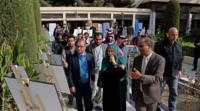



Abdul Salam Hanafi, the Taliban’s Deputy Prime Minister, discussed the challenges facing Afghan returnees and efforts to support them with Rabab Fatima, head of UNAMA and the UN Secretary-General’s Special Representative for Afghanistan.
In a statement issued on Monday, 9 November, the Taliban’s Presidential Palace said Fatima had described managing the challenges facing returnees in Afghanistan as a major concern.
According to the statement, Abdul Salam Hanafi said the Taliban were making efforts to address the problems facing more than eight million people who had returned to Afghanistan and were committed to full cooperation in this regard.
He added that relevant organisations should also work together to protect the rights of returnees, create employment opportunities and provide them with shelter.
According to the Taliban, Rabab Fatima expressed hope that efforts to promote Afghanistan’s economic development and reconstruction would continue.
UNAMA has not yet commented on the meeting or issued a statement about it. The Taliban have also not released any photographs or videos of the meeting.
Previously, Mawlawi Kabir, the Taliban’s Minister of Refugees and Repatriation, had also discussed humanitarian assistance for Afghan returnees with Rabab Fatima.
According to the International Organization for Migration (IOM), approximately 6.5 million Afghans returned to the country from Iran and Pakistan between mid-September 2023 and 31 August 2026. The figure includes both voluntary returnees and those deported from the two countries.
On 30 October 2026, the IOM announced that more than 1.3 million Afghans had returned from Iran and Pakistan during the current calendar year alone.
According to the organisation’s figures, more than 6.6 million returns from the two countries have been recorded since September 2023.
The IOM said approximately 2.9 million Afghans returned to the country in 2025 alone.
The large-scale return of Afghans, particularly the deportation of migrants from Iran and Pakistan, has placed considerable pressure on Afghanistan’s resources, public services, labour market and shelter facilities.