


KABUL — When the Taliban returned to power in August 2021, many Afghan women feared the freedoms they had gained over two decades would disappear. Nearly five years later, those fears have become reality.
Today, Afghanistan stands alone as the only country in the world where girls are banned from secondary school and university education. Women face sweeping restrictions on employment, movement, public participation, and access to services. Human rights groups, United Nations officials, and Afghan women themselves describe the situation as one of the most severe women’s rights crises in the world.
Across Afghanistan, women describe lives increasingly confined to their homes.
“We are alive, but we are invisible,” said a 24-year-old former university student in Kabul, who asked not to be identified for security reasons. “Every year another door closes.”
Education: A Generation Locked Out
Perhaps no Taliban policy has drawn more international condemnation than the ban on girls’ education.
In September 2021, secondary schools were reopened only for boys. In December 2022, women were barred from universities. Since then, millions of Afghan girls have been denied access to education beyond primary school. UNESCO and UNICEF warn that the consequences will be felt for decades.
According to UNICEF, more than one million girls have been prevented from attending secondary school since the restrictions began. The organization estimates that if current policies continue, Afghanistan could lose up to 20,000 female teachers and more than 5,000 female health workers by 2030.
In Herat, a 17-year-old student said she has spent the last three years studying alone at home.
“I was preparing for university,” she said. “Now I don’t know what my future looks like.”
UNESCO has warned that Afghanistan is facing an educational catastrophe that could affect generations of women and girls.

Women Pushed Out of Work
The restrictions extend far beyond schools.
Since 2021, the Taliban have imposed broad limitations on women’s employment. Women have been removed from many government positions, restricted from working with non-governmental organizations, and excluded from numerous sectors of public life. Female representation in the civil service has fallen significantly.
The economic consequences are severe.
The World Bank and other analysts have warned that excluding women from education and employment is reducing Afghanistan’s economic potential and could cost the country billions of dollars in future productivity and income.
For many families, the loss of women’s income has pushed households deeper into poverty.
“In the past I worked as a teacher,” said a woman in Balkh Province. “Now my husband is the only source of income. Sometimes we cannot afford basic food.”

Restrictions on Daily Life
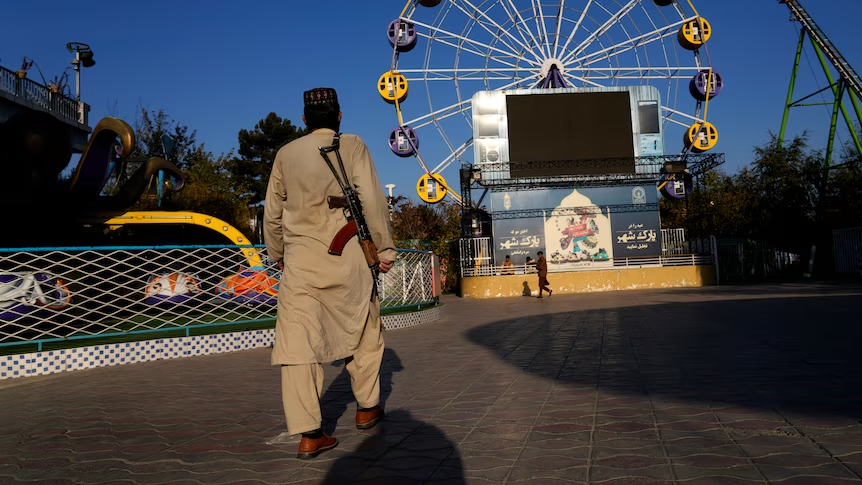
Women are no longer allowed to enter parks, gyms, public baths, or many recreational spaces. Strict dress code requirements have been enforced across the country, while regulations regarding male guardianship continue to limit women’s freedom of movement. Human rights organizations say these restrictions have effectively removed women from much of public life.
Recent incidents in Herat have highlighted the ongoing enforcement of these rules.
According to humanitarian organizations and media reports, dozens of women were detained over alleged violations of dress regulations. A female medical worker employed by Doctors Without Borders was among those temporarily detained despite traveling to work.
The arrests sparked protests and renewed international criticism.
The United Nations Security Council recently called on the Taliban to reverse restrictions on women and girls and to ensure their equal participation in society.
Rising Concerns Over Health
Healthcare professionals warn that restrictions on women are beginning to affect health outcomes.
Afghanistan already has one of the world’s highest maternal mortality rates. Experts fear the exclusion of women from education and employment will further reduce the number of female health professionals available to provide care.
UN Women and UNICEF have warned that maternal mortality could rise dramatically if current trends continue.
In many parts of the country, cultural norms require women to seek treatment from female health workers. As the number of trained women declines, access to healthcare may become increasingly difficult.
Child Marriage and Social Pressures
Human rights organizations report growing concerns about child marriage and forced marriage.
Activists argue that when girls are denied education and employment opportunities, families often see fewer alternatives for their daughters. Several international organizations have linked educational restrictions to increased risks of early marriage and economic dependency.
Women’s rights advocates warn that many girls are being forced into adulthood without the opportunity to choose their future.
Resistance Continues
Despite the restrictions, Afghan women continue to resist.
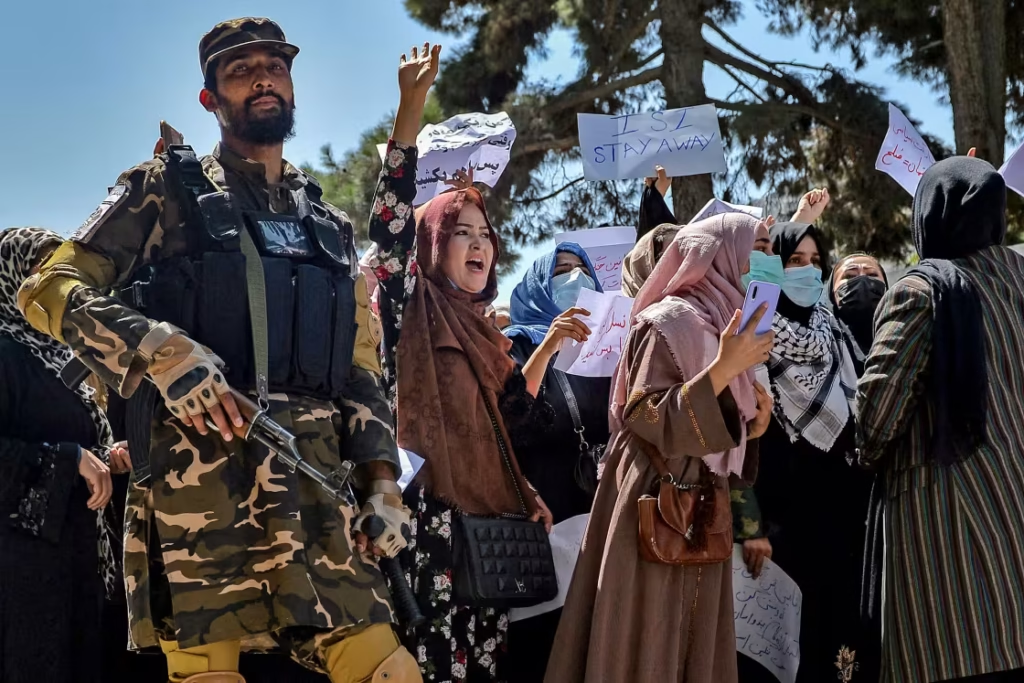
Since 2021, women have organized protests, online campaigns, underground education initiatives, and advocacy efforts both inside Afghanistan and abroad. Many have faced detention, intimidation, interrogation, and threats because of their activism. Human rights groups say women activists remain among the most vulnerable groups in the country.
Some women have turned to online education and digital learning platforms to continue their studies. Researchers studying Afghan women have found that many are using technology and online learning tools to pursue education despite the bans.

International Response
The international community has repeatedly condemned Taliban policies toward women.
The United Nations, European Union, Human Rights Watch, Amnesty International, and numerous governments have called for the immediate restoration of women’s rights. Several UN officials have described the situation as unprecedented in the modern world.
UN Women reports that approximately 78 percent of young Afghan women are currently not in education, employment, or training. The agency says Afghanistan is experiencing the world’s most severe women’s rights crisis.
Yet diplomatic pressure has so far failed to reverse any of the major restrictions imposed since 2021. UN Women notes that none of the significant limitations on women and girls introduced by the Taliban have been lifted.
“We Are Still Here”
In Kabul, women continue to gather quietly in homes, teach children in informal classes, and search for ways to remain connected to a world that increasingly excludes them.
“We have lost many rights,” said a former journalist now living in hiding. “But we have not lost hope.”
For millions of Afghan women, the struggle is no longer simply about education, employment, or public participation. It is about preserving identity, dignity, and the right to exist as equal members of society.
As Afghanistan approaches five years under Taliban rule, that struggle continues every day behind closed doors, in secret classrooms, and in the voices of women determined not to disappear.


