



Kabul, Afghanistan — When flash floods tore through villages in northern Afghanistan on May 2024, Mohammad Yousuf watched helplessly as muddy water swept away his home, farmland and livestock.
“Everything disappeared within minutes,” he said from Baghlan Province, one of the areas hardest hit by flooding. “We survived, but we lost everything we had.”
His story is becoming increasingly common across Afghanistan, where communities are facing a growing climate and environmental crisis that experts say has intensified since 2021.
From devastating floods and prolonged droughts to deadly earthquakes and severe water shortages, millions of Afghans are struggling to cope with disasters that scientists increasingly link to climate change. Afghanistan is considered one of the world’s most vulnerable countries to climate shocks despite contributing very little to global greenhouse gas emissions.

In May 2024, flash floods killed hundreds of people across northern Afghanistan, particularly in Baghlan Province, where entire villages were submerged. Thousands of homes were destroyed, roads washed away and agricultural land buried under mud. International agencies reported that more than 173,000 people were affected by flooding across the country during 2024.
Residents in Baghlan say many families are still struggling to recover.
“We rebuilt part of our house, but every time it rains, people become afraid,” said a local resident in Baghlani Jadid district.
The United Nations has repeatedly warned that flooding is becoming more frequent and intense because of changing weather patterns, poor infrastructure and environmental degradation.
Drought Tightens Its Grip
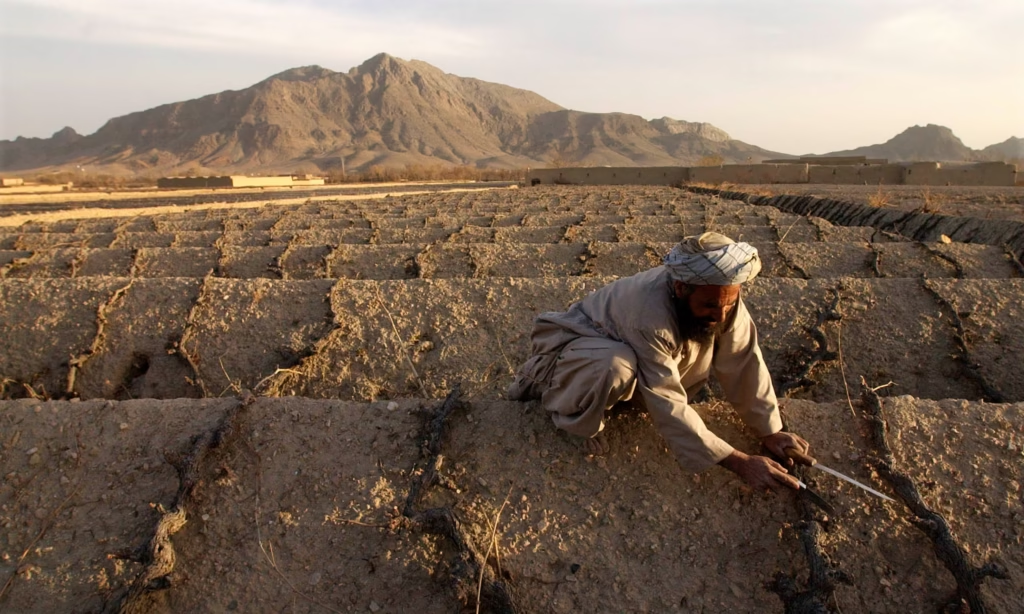
While floods devastate some regions, drought continues to affect large parts of western and southern Afghanistan.
In Badghis, Herat, Faryab and Kandahar provinces, farmers say water shortages have reduced harvests and threatened livelihoods.
Abdul Rahman, a farmer in Badghis, said many wells have dried up over the past several years.
“We used to grow enough wheat for our families,” he said. “Now we barely harvest enough to survive.”
According to humanitarian agencies, millions of Afghans continue to be affected by drought, with water scarcity becoming one of the country’s most serious environmental challenges. OCHA reported that drought affected approximately 3.4 million people last year alone.
Earthquakes Compound the Crisis
Natural disasters have not been limited to floods and drought.
In October 2023, powerful earthquakes struck Herat Province, killing thousands of people and reducing entire villages to rubble. Thousands of families remain vulnerable, with reconstruction efforts slowed by funding shortages and economic hardship.
Since then, additional earthquakes have struck other parts of the country, highlighting Afghanistan’s vulnerability to multiple environmental threats. Recovery efforts continue to face significant funding gaps, according to the United Nations and its partners.

Water Crisis in Kabul

In the capital, Kabul, residents face a different challenge.
Groundwater levels have been falling for years, forcing many households to rely on private water suppliers or travel long distances to access clean water.
Environmental specialists warn that rapid urban growth, climate change and over-extraction of groundwater could worsen the situation in coming years.
Many families say access to safe drinking water has become increasingly difficult and expensive.
Taliban Seek International Support
Taliban officials have repeatedly acknowledged the impact of climate-related disasters and appealed for international assistance.
The Afghanistan National Disaster Management Authority has coordinated emergency responses to floods, earthquakes and severe weather, but officials say the country lacks sufficient resources and technical capacity to respond effectively to large-scale disasters.
Humanitarian organizations continue to work with local authorities to provide emergency relief, food assistance and shelter to affected communities.

International Agencies Warn of Growing Risks
The United Nations Development Programme (UNDP), the International Organization for Migration (IOM) and other agencies have warned that climate change is becoming a major driver of humanitarian needs in Afghanistan.
Recent assessments found that below-average rainfall, drought conditions and recurring floods continue to affect communities across nearly all provinces. Environmental pressures are also contributing to displacement, food insecurity and economic hardship.
According to ReliefWeb’s Natural Disasters Dashboard, more than 72,000 people were affected by natural disasters across 33 provinces during the first months of 2026 alone.
“Climate Change Is Already Here”
For many Afghans, climate change is no longer a distant threat.
In villages damaged by floods, in drought-stricken farming communities and among families still recovering from earthquakes, environmental disasters have become part of everyday life.
“We hear about climate change on the radio,” said one farmer in western Afghanistan. “For us, it is not something for the future. It is happening now.”
As international funding declines and humanitarian needs continue to rise, aid agencies warn that without long-term investment in climate resilience, water management and disaster preparedness, Afghanistan’s environmental crisis is likely to deepen further in the years ahead.


