


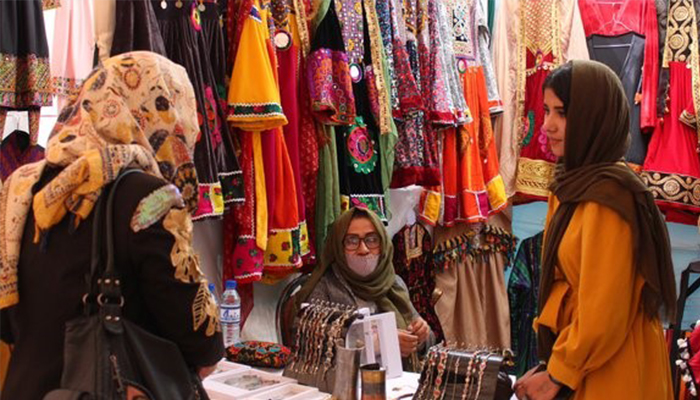
A growing number of Afghan women are turning to small and home-based businesses as a means of survival amid ongoing restrictions on women’s employment, according to a new report by the International Crisis Group.
The report highlights that following bans on women working for international non-governmental organizations and the closure of beauty salons, many women have been pushed out of formal employment and forced to seek alternative sources of income. As a result, activities such as home-based production, handicrafts, tailoring, food processing, and small-scale agriculture have become vital coping mechanisms for thousands of families.
The Crisis Group notes that women’s employment in Afghanistan remains highly fragile and uncertain, while the broader economy has yet to recover from the Taliban takeover. In this context, entrepreneurship has emerged as one of the few viable options for women to earn a livelihood without directly violating Taliban-imposed restrictions.
“Entrepreneurship is a way for some women to earn a livelihood without explicitly running afoul of existing bans, but it remains precarious and unsupported,” the report states.
However, women entrepreneurs continue to face significant barriers. Mumtaz Yousafzai, head of the Women Farmers’ Union, points out that many women lack access to business licenses, which are essential for operating legally and expanding their activities. She says the absence of licenses deprives women of a formal commercial identity and limits their ability to access markets, financial services, and government support. Limited experience and the inability to afford taxes and fees further compound the problem.
Women investors also stress the urgent need for support from both the Taliban authorities and the international community. Karishma, a former beauty salon worker, says she turned to tailoring after her workplace was shut down. Although she now earns some income, she describes it as insufficient to meet basic needs. “Life is full of challenges. We need real support to survive,” she says.
Somaya, another entrepreneur, explains that she was studying at a university in Kabul before higher education for women was banned. With no possibility of continuing her studies, she decided to learn tailoring to support herself. “This was not my first choice, but it was the only option left,” she says.
While Taliban officials have previously claimed that tens of thousands of women are registered as investors and that some work permits have been issued, rights groups argue that these measures fall far short of addressing the scale of the crisis facing Afghan women.
The International Crisis Group warns that without meaningful policy changes, legal protections, and economic support, women-led businesses will remain vulnerable and limited in scope. The report calls on international actors to design assistance programs that take into account the restrictions on women while ensuring they are not excluded from humanitarian and economic recovery efforts.
As Afghanistan faces deepening economic hardship, forced returns of migrants, and reduced international aid, women’s small businesses have become both a lifeline and a symbol of resilience—but one that continues to operate under severe constraints.